Overview
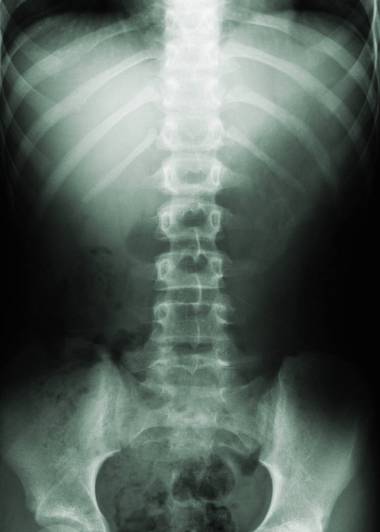
Scoliosis is where the spine twists and curves to the side.
It can affect people of any age, from babies to adults, but most often starts in children aged 10 to 15.
Scoliosis can improve with treatment, but it is not usually a sign of anything serious and treatment is not always needed if it's mild.
Symptoms of scoliosis
Signs of scoliosis include:
- a visibly curved spine
- leaning to 1 side
- uneven shoulders
- 1 shoulder or hip sticking out
- the ribs sticking out on 1 side
- clothes not fitting well
Some people with scoliosis may also have back pain. This tends to be more common in adults with the condition.
When to see a GP
See a GP if you think you or your child has scoliosis. It's unlikely that there's anything seriously wrong, but it's best to get it checked out.
The GP will examine your back and can refer you to a hospital doctor for help with diagnosis if they suspect scoliosis.
An X-ray of your back will be carried out in hospital to check whether your spine is curved and how severe the curve is.
If you're diagnosed with scoliosis, you should see a specialist to discuss treatment options.
Treatments for scoliosis
Treatment for scoliosis depends on your age, how severe the curve is, and whether it's likely to get worse with time.
Many people will not need any treatment and only a small number will need to have surgery on their spine.
- Babies and toddlers may not need treatment as the curve might improve over time. A plaster cast or plastic brace may be fitted to their back to stop the curve getting worse as they grow.
- Older children may wear a back brace to stop the curve getting worse until they stop growing. Sometimes surgery may be needed to control the growth of the spine until an operation to straighten it can be done when they stop growing.
- Adults may need treatment to relieve pain, such as painkillers, spinal injections and, very occasionally, surgery.
It's not clear whether back exercises help improve scoliosis, but general exercise is good for overall health and should not be avoided unless advised by your doctor.
Living with scoliosis
Most people with scoliosis are able to live normal lives and can do most activities, including exercise and sports.
The condition does not usually cause significant pain or any other health problems, and tends to stay the same after you stop growing – see a GP if it gets any worse.
Having scoliosis or wearing a back brace can be tough and may cause problems with body image and self-esteem, particularly for children and teenagers.
You may find it useful to contact a support group, such as Scoliosis Association UK.
These groups are a good source of information and support, and they may be able to put you in touch with other people in a similar situation to you.
Causes of scoliosis
In around 8 in every 10 cases, the cause of scoliosis is unknown. This is called idiopathic scoliosis.
Idiopathic scoliosis cannot be prevented and is not thought to be linked to things such as bad posture, exercise or diet.
Your genes may make you more likely to get it, though, as it sometimes runs in families.
Less commonly, scoliosis may be caused by:
- the bones in the spine not forming properly in the womb – this is called congenital scoliosis and is present from birth
- an underlying nerve or muscle condition, such as cerebral palsy or muscular dystrophy – this is called neuromuscular scoliosis
- wear and tear of the spine with age – this is called degenerative scoliosis, which affects older adults
Scoliosis Association UK has more information about the different types of scoliosis.
Children
If your child has scoliosis, the recommended treatment will depend on their age, how severe the curve is, and whether it's getting worse.
Many children will not need treatment, and only a small number end up having surgery.
Monitoring
Treatment is not always necessary for very young children because their spine may straighten as they grow.
But if the curve does not correct itself, there's a small risk it could reduce the space for the organs to grow, so careful monitoring by a specialist is important.
Your specialist may recommend regular examinations and X-rays to monitor the curve and decide if treatment is needed.
Regular monitoring may also be recommended for older children with mild scoliosis, as treatment might not be needed if it's not getting worse over time.
Wearing a cast
In babies and toddlers, treatment to try to help straighten the spine as it grows may be recommended.
This may involve wearing a plaster cast fitted around their back.
The cast is worn constantly and cannot be removed, but it's changed every few months as your child grows.
Parents often find it easier for their child to wear a cast while they're still very young, rather than getting them to wear a removable back brace every day.
You may decide to switch to a back brace when your child is a bit older.
Back braces
If the curve of your child's spine is getting worse, your specialist may recommend they wear a back brace while they're growing.
This will not correct the curve, but might help stop it getting worse. There are still some uncertainties about how well braces work, though, so they're not recommended by all scoliosis specialists.
The brace:
- will be custom-made to fit your child's body
- will normally be made of rigid plastic, although flexible braces are sometimes available
- is designed to be difficult to see under loose-fitting clothing
- usually needs to be worn for 23 hours a day
- shouldn't interfere with most everyday activities – it normally only needs to be removed for baths, showers, swimming and contact sports
Your child will usually have to wear the brace for as long as they're growing. For most children, this means they can stop wearing it when they're around 16 or 17.
Scoliosis Association UK has more information about bracing.
Surgery
Surgery may be recommended if your child's scoliosis continues to get worse despite trying other treatments, or if they have severe scoliosis and they've stopped growing.
The type of surgery offered will depend on your child's age.
Surgery in children
Younger children – generally those under 10 – can have an operation to insert special rods alongside the spine. This can help stop the curve getting worse as the spine grows.
After the operation, your child will need to return to their specialist every few months to have the rods lengthened to keep up with their growth.
Depending on the type of rods used, this will be done either:
- during a minor procedure where the rods are extended through a small cut (incision) in the back
- using a remote control that activates magnets inside the rods – no incisions are needed to lengthen these rods
Even if they have surgery, your child may need to wear a brace to protect their back.
When they stop growing, the rods can be removed and a final operation to straighten their spine may be carried out.
Surgery in teenagers and young adults
Teenagers and young adults who've stopped growing can have an operation called a spinal fusion to correct the curve.
This is a major operation where the spine is straightened using metal rods, screws, hooks or wires, along with bits of bone taken from elsewhere in your body, often the hip.
These are usually left in place permanently.
Most people:
- spend about a week in hospital after the operation
- can return to school after a few weeks
- can play sports after a few months – although they may need to avoid contact sports for longer
Sometimes they'll need to wear a back brace after surgery to protect the back while it heals.
Risks of surgery
Like any operation, spinal surgery carries a risk of complications. It will only be recommended if your surgeon feels the benefits outweigh the risks.
Some of the main risks include:
- bleeding – if this is severe, your child may need a blood transfusion
- wound infection – this can usually be treated with antibiotics
- the rods or metalwork moving or the grafts failing to attach properly – additional surgery may be required to correct this
- in rare cases, damage to the nerves in the spine – this can lead to permanent numbness in the legs, and can sometimes cause paralysis of the legs and loss of bowel and bladder control
Make sure you discuss the potential complications with your surgeon.
Scoliosis Association UK has more about surgery in young people, preparing your child for surgery and advice before and after surgery.
Exercise and other therapies
Regular exercise is important for children with scoliosis. It can help improve muscle strength and may help reduce any back pain.
Children with scoliosis can usually do most types of exercise. They only need to avoid certain activities if advised to do so by a specialist.
It's not yet clear whether specific back exercises or physiotherapy can help improve scoliosis – they're not recommended by all specialists.
There's currently little reliable evidence to suggest that other therapies, such as osteopathy and chiropractic, can help correct a curved spine or stop it getting worse.
Adult
Back pain is one of the main problems caused by scoliosis in adults, so treatment is mainly aimed at pain relief.
If the condition is not severe and is not causing any pain, treatment may not be needed.
Painkillers
Painkilling tablets may help relieve the pain that can be associated with scoliosis.
NSAIDs, such as ibuprofen, are usually the first treatment recommended. These are available to buy from pharmacies and supermarkets without a prescription.
But NSAIDs are not suitable for everyone, so check the box or leaflet to see whether you can take the medicine first. Speak to a pharmacist if you're not sure.
See a GP if over-the-counter painkillers do not work. They may prescribe stronger painkillers or refer you to a specialist pain management clinic.
Exercise
Activities that strengthen and stretch your back may help reduce your pain. Exercise can also help you maintain a healthy weight, which can reduce the strain on your back.
It does not matter what type of exercise you choose – the important thing is to keep your back moving. Choose something you enjoy and are likely to be able to stick with.
Some people may also benefit from doing back exercises taught by a physiotherapist. These are unlikely to improve the curvature of your spine, but may help with your pain.
If you have scoliosis, it's a good idea to speak to a healthcare professional – such as a GP, scoliosis specialist or physiotherapist – before starting a new exercise programme to check it's safe.
Spinal injections
Scoliosis can sometimes irritate or put pressure on the nerves in and around your spine, causing pain, numbness and a tingling sensation that can be felt in your lower back down to your feet.
In these cases, injections of steroid medication and local anaesthetic given into your back may help.
But the benefits of these injections tend to only last a few weeks or months, so they're not usually a long-term solution.
Back braces
Back braces are not often used in adults with scoliosis, but they can provide pain relief by supporting your spine.
A brace may be considered as an alternative to surgery if you're not well enough to undergo an operation.
Surgery
Most adults with scoliosis will not need lumbar decompression surgery.
But it may be considered if:
- the curve in your spine is severe or getting significantly worse
- you have severe back pain and other treatments have not helped
- the nerves in your spine are being irritated or squashed
If you need surgery you may be offered:
- lumbar decompression surgery, to relieve pressure on nerves in your spine
- spinal fusion, to join 2 or more vertebrae together to stabilise, strengthen and straighten your spine
Risks of surgery
Spinal surgery is a major operation and it can take up to a year or more to fully recover.
It also carries a risk of potentially serious complications, including:
- failure to reduce the pain – surgery is generally better at relieving pain that radiates to the legs, rather than pain in the back
- a wound infection
- a blood clot
- rarely, damage to the nerves in the spine – this can result in permanent leg numbness or weakness, or some degree of paralysis in rare cases
Scoliosis Association UK has more information about surgery for degenerative scoliosis and advice for before and after surgery.