Scarlet fever
Introduction
Scarlet fever is a bacterial illness that causes a distinctive pink-red rash. It is rare in the UK nowadays and is usually mild.
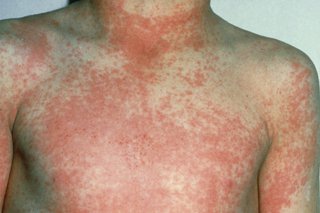
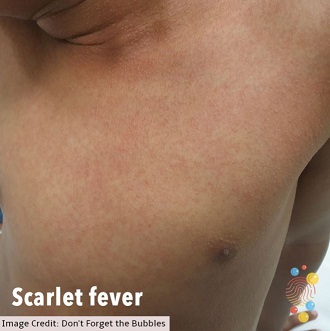
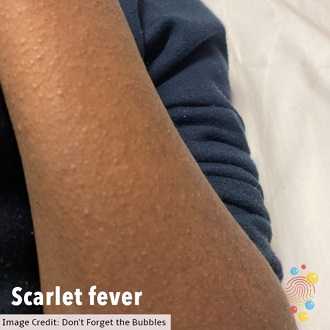
The characteristic symptom of scarlet fever is a widespread, fine pink-red rash that feels like sandpaper to touch. It may start in one area, but soon spreads to many parts of the body, such as the ears, neck and chest. The rash may be itchy.
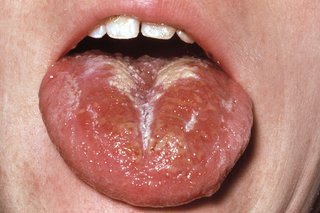
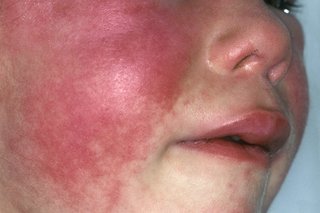
Someone with scarlet fever will develop a flushed, red face – hence the name scarlet fever – although the skin around the mouth stays white. The tongue may look a bit like a strawberry.
Other symptoms include swollen neck glands, especially if you generally feel unwell.
Read more about the symptoms of scarlet fever.
Symptoms usually develop one to four days after a person is infected.
Scarlet fever usually follows a sore throat or a skin infection (called impetigo) that is caused by particular strains of streptococcus bacteria.
Scarlet fever is also known as scarlatina, although this sometimes refers to a milder form of the disease.
How it spreads
Scarlet fever is very contagious. It can be caught by breathing in bacteria in airborne droplets from an infected person's coughs and sneezes.
Find out more about the causes of scarlet fever.
Who is affected?
Anybody can catch scarlet fever, but it usually affects children aged four to eight years old. Because it's so contagious, scarlet fever is likely to affect someone who is in close contact with a person with a sore throat or skin infection caused by streptococcus bacteria. It may also affect someone who lives in a crowded environment, such as day care.
You will only develop the symptoms of scarlet fever if you're susceptible to toxins produced by the streptococcus bacteria. Most children over 10 will have developed immunity to the toxins from streptococcal bacteria, and children under two will have acquired immunity from their mothers.
Outlook
Although scarlet fever used to be a very serious disease, most cases today are mild.
Scarlet fever is easily treatable with antibiotics, which must be taken for 10 days. Most people recover after four to five days.
Find out more about treating scarlet fever.
There is no evidence that catching scarlet fever when pregnant will put your baby at risk. However, pregnant women should tell healthcare staff if they are in contact with streptococcal infections, such as scarlet fever, around the time of the birth.
^^ Back to top
Symptoms
Symptoms of scarlet fever generally take one to four days to appear after infection.
The illness often starts with a sore throat or skin infection and fever. The rash appears 12 to 48 hours after the fever.
Rash
Red blotches are the first sign of the rash. These turn into a fine pink-red rash that feels like sandpaper to touch and looks like sunburn.
The rash may start in one place but soon spreads to many other parts of the body. It commonly affects the ears, neck, chest, elbows, inner thighs and groin.
The rash does not normally spread to the face. However, the cheeks become flushed and the area just around the mouth stays quite pale. The rash will turn white if you press a glass on it.
The rash lasts for six days, then usually fades from the top of the body downwards. It usually disappears within a week. The rash may be itchy and usually occurs alongside other symptoms (see below). In milder cases, sometimes called scarlatina, the rash may be the only symptom.
Other symptoms
Other symptoms may include:
- headache
- swollen neck glands
- loss of appetite
- nausea or vomiting
- stomach pain
- broken blood vessels in the folds of the body, such as the armpit, which cause red streaks that may last a couple of days after the rash has gone (these are known as pastia lines)
- a white coating on the tongue, which peels a few days later leaving the tongue red and swollen (this is known as strawberry tongue)
- a general feeling of being unwell
If you feel very unwell, with severe muscle aches, diarrhoea or vomiting, see your doctor. This is to rule out other infections caused by streptococcal bacteria, such as toxic shock syndrome, which can be easily treated if caught early.
Outer layers of skin, usually on the hands and feet, may peel for up to six weeks after the scarlet fever rash has faded.
Chickenpox and scarlet fever
If your child has chickenpox and develops a rash that looks like scarlet fever, it may be a sign of a secondary bacterial infection. Get medical advice immediately as the secondary infection may prolong the chickenpox or make it more severe.
^^ Back to top
Causes
Scarlet fever is extremely contagious.
It can be caught by:
- breathing in bacteria in airborne droplets from an infected person's coughs and sneezes
- touching the skin of a person with a streptococcal skin infection
- sharing contaminated towels, baths, clothes or bed linen
It can also be spread by people who have the bacteria in their throat but do not show any symptoms (known as carriers).
You will only develop the symptoms of scarlet fever if you are susceptible to the toxins released by streptococcal bacteria.
^^ Back to top
Diagnosis
Your GP can usually diagnose scarlet fever by looking at the characteristic rash and other symptoms.
To confirm the diagnosis, a sample of saliva is taken from the back of the throat, known as a throat swab, and tested in a laboratory. This reveals which bacteria have caused the infection. A blood test is sometimes required.
Scarlet fever is a notifiable disease. This means that doctors must report any cases to the local health protection unit so they can monitor the spread of disease.
^^ Back to top
Treatment
Most mild cases of scarlet fever go away in about a week without treatment.
However, you are advised to get treatment as this will speed recovery. There is also a higher risk of complications from scarlet fever if you don't have treatment.
Most people recover around four to five days after starting treatment.
Antibiotics
The most common treatment for scarlet fever is a 10-day course of antibiotics. This will usually be penicillin taken by mouth. For people who are allergic to penicillin, the antibiotic erythromycin can be used instead.
Stay at home for at least 24 hours after you start treatment.
Symptoms usually go in a few days if the antibiotics are taken properly. The whole course of treatment must be finished to make sure the infection is fully cleared.
The fever will normally disappear within 12 to 24 hours of starting antibiotics.
Other treatments
Other ways to treat the symptoms of scarlet fever include:
- drinking plenty of cool fluids, especially if you do not have much of an appetite
- keeping the room cool
- taking paracetamol to relieve aches and pains and bring down a high temperature
- using calamine lotion to relieve itching of the rash
How long should I stay at home?
Stay away from school or work for at least 24 hours after you start antibiotic treatment.
^^ Back to top
Complications
Most cases of scarlet fever cause no complications.
On rare occasions, one of the following complications may occur:
Complications usually happen only if scarlet fever is not treated or if treatment is unsuccessful.
Very rare complications include:
You may have one of these rare complications if you are very unwell, in severe pain and have severe headache, vomiting or diarrhoea. See your GP if any of these symptoms appear in the first few weeks after the main infection has cleared up.
Can scarlet fever come back?
One episode of scarlet fever usually makes you immune to further infection. However, recurring attacks happen in rare cases as different forms of streptococcal bacteria can cause the infection.
^^ Back to top
Prevention
Scarlet fever is highly infectious. It is spread through close physical contact with someone who has it, or by breathing in bacteria in droplets from an infected person's coughs or sneezes.
If your child has scarlet fever, do not let them go to school and keep them away from other people until they have been on a course of antibiotics for at least 24 hours.
All tissues and handkerchiefs that someone with scarlet fever has coughed or sneezed into should be washed or disposed of immediately. Wash your hands thoroughly with soap and water if you have touched any of these.
Bacteria can be spread by touching someone with a streptococcal skin infection or by sharing contaminated eating utensils, cups and glasses, clothes, baths, bed linen or towels.
Scarlet fever is not common in adults. To avoid catching scarlet fever while you are pregnant and to avoid getting the symptoms, such as a high temperature and sore throat, try to keep away from any children who have a suspicious-looking skin rash.
^^ Back to top
Q&A
What are the risks of scarlet fever during pregnancy?
There is no evidence that catching scarlet fever when you’re pregnant will put your baby at risk.
Scarlet fever
Scarlet fever is caused by bacteria from the streptococcus (strep) group. It has a distinctive pink-red rash that usually develops after a sore throat (strep throat) or skin infection (impetigo) caused by strep bacteria.
Scarlet fever is rare in the UK because strep infections can be treated with antibiotics. It most commonly affects children, although anyone can get it.
Avoiding scarlet fever
Scarlet fever is infectious. To avoid getting scarlet fever symptoms such as a high temperature and sore throat, it’s best to avoid contact with children who have the infection.
What if I get a rash during pregnancy?
If you develop a rash when you’re pregnant, get advice from your GP or midwife straight away so they can diagnose its cause.
^^ Back to top
The information on this page has been adapted by NHS Wales from original content supplied by NHS Choices.