Huntington's disease
Introduction
Huntington’s disease is an inherited disease of the brain. There is no cure, but much can be done to help families.
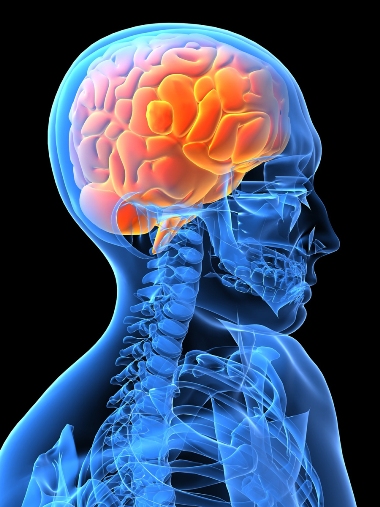
The disease damages some of the nerve cells in the brain, causing degeneration, deterioration and gradual loss of function of areas of the brain. This affects movement, cognition (perception, awareness, thinking, judgement) and behaviour.
Early symptoms, such as personality changes, mood swings and unusual behaviour, are often overlooked at first and attributed to something else. See Huntington's disease - symptoms for more information.
Huntington's disease was originally called Huntington’s chorea, after the Greek word for dancing. This is because the associated involuntary movements of the condition can look like jerky dancing.
Who is affected?
Both men and women with a family history of Huntington's can inherit the disease. Symptoms usually start to show during adulthood. Juvenile (children’s) Huntington’s disease develops before the age of 20. Only 5-10% of people with Huntington's develop the condition at a very young age, and the pattern of features may be different.
How common is it?
UK studies have found that approximately 6-7 people per 100,000 are affected by Huntington's disease.
However, the true figure is likely to be much higher. About 6,700 people diagnosed with the disease are currently being cared for by the Huntington's Disease Association. This means that the UK prevalance must be at least 12.4 per 100,000.
There are also people who have inherited the disease but have not yet developed symptoms. This group, who are unaware they carry the disease, may have had children and passed on the disease without realising.
It is thought that the number of people who have the Huntington's gene and are not yet affected is twice that of those who have symptoms.
Outlook
There is no cure for Huntington's disease, and its progress cannot be reversed or slowed down.
Medication can manage some of the symptoms, such as irritability or excessive movement. Therapies (such as speech and language therapy and occupational therapy) can help with communication and day-to-day living (see Huntington's disease - treatment for more information).
Generally, the disease progresses and gets worse for around 10 to 20 years until the person eventually dies. In the later stages of Huntington's disease, the person will be totally dependent and will need full nursing care.
Death is usually from a secondary cause, such as heart failure, pneumonia or another infection.
^^ Back to top
Symptoms
People can start to show the symptoms of Huntington's disease at almost any age, but most will develop problems between 35 and 55.
Generally, the disease progresses and gets worse for around 10 to 20 years until the person eventually dies. Symptoms vary between people; there is no typical pattern.
Early symptoms, such as personality changes, mood swings and unusual behaviour, are often overlooked at first and attributed to something else.
Some people with Huntington's may refuse to accept their illness or the seriousness of it.
Behavioural changes
Behavioural changes are often the first symptoms to appear in Huntington's disease and can be the most distressing. These symptoms often include:
- a lack of emotions and not recognising the needs of others in the family
- alternating periods of aggression, excitement, depression, apathy, antisocial behaviour and anger
- difficulty concentrating on more than one task, which causes irritability
- short-term memory lapses
- problems with orientation
A person with Huntington's may display a lack of drive, initiative and concentration that may make them appear lazy. This is not the case; it is just the way the disease affects their personality. Also, someone with Huntington's may develop a lack of interest in hygiene and self-care.
Read the Huntington Disease Association (HDA) factsheet for more information on Behavioural Problems (links to external site).
Psychiatric problems
Many people with Huntington's disease have depression– this occurs as part of the disease, not just as a response to the diagnosis. Symptoms of depression include continuous low mood, tearfulness and feelings of hopelessness.
A few people may also develop problems such as obsessive behaviours and, sometimes, schizophrenia.
Studies have shown that people with Huntington's disease are more likely to think about committing suicide, particularly near the time of diagnosis when symptoms are already apparent, and when the person starts to lose their independence. Find out how to get help if you think someone you care for is suicidal.
Movement problems
Huntington's disease affects movement. Early symptoms include slight, uncontrollable movements of the face, and jerking, flicking or fidgety movements of the limbs and body. These move from one area of the body to another and can cause the person to lurch and stumble.
As the disease progresses, the uncontrollable movements are more frequent and extreme. This may change over time so that movements become slow and muscles more rigid.
Feeding problems
People with Huntington's disease tend to lose weight despite having a good appetite. They can find eating tiring, frustrating and messy because the muscles in the mouth and the diaphragm muscles do not work properly, due to the loss of control.
Loss of co-ordination can lead to spilling or dropping food. Swallowing is a problem, so choking on food and drink, particularly thin drinks such as water, can be a common problem. You may be referred to a dietitian or a speech and language therapist if you find it difficult to swallow. In some cases, a feeding tube can be inserted (see Living with Huntington's disease).
For more information, read the HDA factsheet on Eating and Swallowing Difficulties (links to external site).
Communication problems
Communication and cognition (perception, awareness, thinking and judgement) are affected by Huntington's disease.
People with Huntington's often have difficulty putting thoughts into words, and they slur their speech. They can understand what is being said but may not be able to respond or communicate that they understand. Impaired breathing can make speech difficult.
Sexual problems
People with Huntington's disease can have problems with sexual relationships. This is usually a loss of interest or, less commonly, making inappropriate sexual demands. For more information on this, read the HDA factsheet on Sexual Problems (links to external site).
End of life
In the later stages of Huntington's disease, the person will be totally dependent and needing full nursing care.
Death is usually from a secondary cause, such as heart failure, pneumonia or another infection.
Juvenile Huntington's disease
Juvenile Huntington's disease (HD) is a less common form of the disease, which starts to show in adolescents younger than 20 years.
Common signs in people this age are:
- a rapid decline in school performance
- changes in handwriting
- problems with movement, such as slowness, stiffness, tremor or muscle twitching (similar to symptoms seen in Parkinson's disease)
- seizures (fits)
A patient's perspective
"I am not as whole as I was. My thought processes have slowed down and it takes enormous self-discipline to do ordinary things like getting dressed – it’s exhausting.
I recognised these changes in myself years before anyone else did, and it is important that other people (including healthcare professionals) just accept this. The changes don’t have to be measurable.
They can’t reassure me that all is well, but they can support me. By accepting that changes are happening, they give me permission to adapt my life at an early stage.
I have changed my high-powered job to an 'ordinary' job, for example, which has taken pressure off me and allowed me to put energy into other things.
The end stage of Huntington’s disease will happen no matter what, but I will live most of my life before this point and I want to make the most of it.
Sue Walters, Hertfordshire
(Taken from BMJ 2010;340:c3109)
^^ Back to top
Causes
Huntington's disease is caused by a faulty gene that is found on chromosome number four (see below).
The normal copy of the gene produces a protein called huntingtin, but the faulty gene is larger than normal and produces a larger form of huntingtin.
Cells in parts of the brain – specifically, the basal ganglia and parts of the cortex – are very sensitive to the effects of the abnormal huntingtin. This makes them function poorly and eventually die.
The brain normally sends messages through the basal ganglia. When this part of the brain is damaged, it causes problems with control of movement, behaviour and thinking.
It is still unclear exactly how abnormal huntingtin affects the brain cells and why some are more sensitive than others.
Chance of inheriting the disease
A parent with the Huntington's gene has one good copy of the gene and one faulty copy of the gene. Their child will inherit one of these genes. Therefore, there is a 50:50 chance that the child will get the faulty gene. If they get the faulty gene, they will develop Huntington's disease.
There is a 50:50 chance that the child with Huntington's disease will pass the faulty gene on to their future child.
This pattern of inheritance is called autosomal dominant.
In as many as 3% of cases, there is no family history of the disease. This could be due to adoption or because relatives with the disease died early from other causes. Or, it could be a new genetic mutation (a new error in a gene). For example, there may be a fault in the genetic material of the father's sperm.
Genes and chromosomes
Genes are the instructions for making a human being. They are made up of DNA and packaged onto strands called chromosomes.
We have two copies of all our genes, therefore our chromosomes are in pairs.
Humans have 46 chromosomes (23 pairs). The faulty gene that causes Huntington's disease is found on chromosome number four.
^^ Back to top
Diagnosis
Your GP will refer you to a neurologist (specialist in treating disorders of the brain) if they feel your symptoms need further investigation.
The neurologist will ask questions about your symptoms, such as whether you have had any recent emotional problems, to see if it is likely that you have Huntington's disease and to rule out other similar conditions.
They may also test a number of physical functions, such as your reflexes, eye movements, balance, walking, general movements and strength. All of these can be affected by Huntington's disease.
Confirming the diagnosis
If you are showing symptoms of Huntington's disease and it is known to run in your family, or if your doctor strongly suspects that you have the disease, genetic testing can confirm the diagnosis.
It is important to realise that the diagnosis is based on a combination of the doctor recognising the pattern of changes on the neurological examination, family history and the genetic test result. It is possible to have the gene change and still be healthy.
Taking a genetic test
The children of someone with Huntington's disease can take a genetic test (after the age of 18) to see if they have inherited the disease. If they have inherited the faulty gene, they will develop Huntington's but it is not possible to work out at what age.
You can ask your GP or neurologist to arrange an appointment for you at a regional genetic clinic. You will have some counselling, then two blood samples will be taken. Your DNA is extracted from the blood sample and analysed to see if you have inherited the faulty gene.
You may have to wait two to four weeks for the test results.
Having a brain scan
In the early stages of Huntington's disease there may be no specific changes on the brain scan. A doctor may use a brain scan at any stage of the illness if there is a concern that there may be problems in addition to Huntington's disease.
A CT scan uses X-rays and a computer to create a detailed image of the brain. A CT scanner is a large ring-shaped machine. The X-ray scanner inside the ring rotates in small movements around your body as you lie on a bed that moves backwards and forwards through the ring. As you move through the machine, the scanner uses a series of X-ray beams to scan your brain.
A MRI scan uses strong magnetic fields and radio waves to produce a detailed image of the brain. The MRI scanner consists of a large tube that contains a series of powerful magnets. You lie inside the tube during the scan.
Getting tested in pregnancy
If you are pregnant and already known to have the Huntington’s disease gene, it is possible to have a direct test on the pregnancy at 11 weeks. This needs careful consideration and can be discussed with a genetic counselling team.
If one half of a couple is at risk of Huntington's disease but does not want to find out if they have the disease, and the couple would like to have children free of risk, then more complex indirect genetic testing is needed. This needs to be discussed with the genetic clinic. One option is preimplantation genetic diagnosis.
Preimplantation genetic diagnosis
Preimplantation genetic diagnosis can be used when one partner is known to have the faulty gene. This is a direct test.
It involves having in-vitro fertilisation (IVF) treatment, then genetically testing the embryo in a laboratory to see if it has the faulty gene. The embryo will only be placed inside the woman if it does not have the faulty gene.
The procedure is also an option for couples where one partner has a 50% risk and does not want to be tested. An embryo that is not at 50% risk will be placed inside the woman.
Preimplantation genetic diagnosis is not a straightforward procedure, and it raises a number of issues that need to be considered in detail. For more information, read the Human Fertilisation and Embryology Authority's guidance on the procedure (links to external site).
Should I get tested?
Not everyone wants to know if they have inherited the disease. It is a personal choice.
Some people say they would rather not know because they want to enjoy their life and they may die of other causes before the disease develops.
Most people have approximately 40 years of normal healthy life before the disease develops.
Less than one in five people at risk of Huntington's disease choose to have the genetic test.
If you are considering genetic testing, it is strongly recommended that you speak to a genetic counsellor first. Your GP will be able to refer you.
Late diagnosis
Often, people with Huntington's disease start to have symptoms a number of years before Huntington's is actually diagnosed.
This is especially true when people are not aware that Huntington's disease runs in their family.
^^ Back to top
Treatment
There is no cure for Huntington's disease. Its progress cannot be reversed or slowed down, although this is the goal of a number of research projects.
Medication can be used to manage some of the associated symptoms. Therapies (such as speech and language therapy and occupational therapy) can help with communication and day-to-day living.
Regular exercise is extremely important: those who keep active tend to feel much better physically and mentally than those who do not exercise. Co-ordination may be poor, but walking independently with the use of walking aids, if necessary, can make all the difference.
See Living with Huntington's disease for information on managing lifestyle issues, such as feeding and communication.
Medication for Huntington's disease
Medicines for Huntington's disease, which can be taken in liquid form, are described below.
Most of these drugs have side effects such as fatigue, restlessness and hyperexcitability. It may be hard to tell if these are symptoms of the disease or a result of the medication.
Antidepressants
Antidepressants should be considered as they can improve mood swings and treat depression. They include:
- SSRI antidepressants, such as fluoxetine, sertraline, citalopram and paroxetine
- tricyclic antidepressants, such as nortriptyline
- other types of antidepressants, including nefazodone, bupropion and venlafaxine
Antidepressants may cause constipation, sweating, shaking or trembling, and difficulty sleeping. For more information, see antidepressants.
Medication to supress involuntary movements
The below medicines supress the involuntary movements, or chorea, seen in Huntington's disease:
- tetrabenazine reduces the amount of the chemical dopamine reaching some of the nerve cells in the brain (this is usually the first choice treatment)
- benzodiazepines, such as clonazepam and diazepam
- antipsychotic medication, such as fluphenazine, haloperidol, risperidone, olanzapine and quetiapine
Antipsychotics may also help to control delusions (believing things that are untrue), hallucinations (seeing or hearing things that are unreal) and violent outbursts. But it may have severe side effects, such as:
- stiffness and rigidity
- sedation
- tremor (shaking)
- slowness of movement
Because of these side effects, the lowest possible dose of antipsychotics will be prescribed.
Helpline
If you would like to talk to someone about the disease, the Huntington's Disease Association has a team of advisers who can help. Call 0151 298 3298. There are branches and support groups across England and Wales.
^^ Back to top
Living with
Huntington's disease puts a great strain on relationships and is very stressful and upsetting to the family. It is distressing to see a family member's state of mind deteriorate so much that they may not be like their former self at all.
Daily routines such as getting dressed and eating meals can be frustrating and exhausting. However, help is available.
Help with communication
Speech and language therapy can improve communication skills, improve memory and teach alternative ways of communicating. Speech therapy can also help with swallowing difficulties.
Communication aids can sometimes be helpful. These enable communication without the need for talking. For example, you can point to symbols on a chart to indicate your mood or whether you are hungry.
The family of the person with Huntington's disease will need to be patient and supportive. Perhaps they could try alternative ways of communication if speech is a problem. For more information on communication skills in Huntington's disease, go to the factsheet listed at the bottom of this page.
Help with mealtimes
People with Huntington's disease need to have a high-calorie diet. A dietitian can help you to work out an appropriate diet plan.
To help with eating and drinking, food should be easy to chew, swallow and digest. Food can be cut into small pieces or pureed to prevent choking. Feeding equipment is available, such as special straws and non-slip mats. For more tips on diet and help with feeding, read the factsheets listed below.
In the late stages of the disease, it may be necessary to use a tube that goes directly into the stomach for feeding. You may find it useful to read Swallowing Problems and Feeding Tubes in Huntington's Disease (PDF, 485kb, opens in new window). You can also email the Royal Hospital for Neurodisability (info@rhn.org.uk) for information leaflets on swallowing difficulties and artificial nutrition.
If you do not want to be artificially fed in the later stages of the disease, you should make your wishes known to your family and doctor. You may want to consider making an advance decision (a living will) or a statement of wishes and preferences.
Occupational therapy
An occupational therapist (OT) can help you with your day-to-day activities. Your home can be specially adapted by social services to make life easier for you, as you may be at risk of injuring yourself in a fall or accidentally starting a fire.
You may need to have your shower, bath, chairs and bed adapted. You may also need to think about wheelchair access (see the factsheet below for more information).
For more information on the help that an OT can provide, see topic on occupational therapy.
Physiotherapy
A physiotherapist can help you with your mobility and balance by using a range of treatments, including manipulation, massage, exercise, electrotherapy and hydrotherapy (see the topic on physiotherapy for more information). You may be referred to a physiotherapist through your GP or through social services.
Factsheets
The Huntington's Disease Association has a number of useful PDF factsheets (opening in new windows) that give advice on the following:
View all the HTA factsheets on Huntington's disease
Can I drive?
You should inform the Driver and Vehicle Licensing Agency (DVLA) if you have been diagnosed with Huntington's disease and have started to show symptoms, because it will affect your ability to drive. For more information on driving, see Useful links.
You do not need to tell the DVLA if you are carrying the faulty gene but have not yet developed symptoms.
Choosing a care home
The Huntington's Disease Association (HDA) has a useful guide that will help you to explore the housing options available when you need full-time care.
For more information on choosing a home, see Useful links.
Electronic assistive technology
The Royal Hospital for Neurodisability provides an electronic assistive technology (EAT) service. It is comprised of a team of health professionals who provide EAT equipment for patients and residents within the hospital, as well as for people with disabilities living in the community or at other hospitals or units.
Equipment includes:
- communication aids
- computers and software
- switches and other access devices
- powered wheelchair controls
- environmental controls
^^ Back to top
The information on this page has been adapted by NHS Wales from original content supplied by NHS Choices.